At Rest
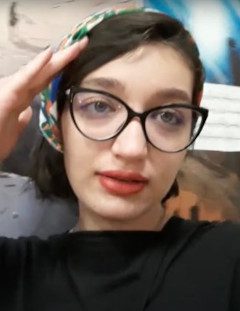
Sarina Esmailzadeh (2006–2022) was a 16-year-old Iranian student, content creator, and women’s rights advocate who became a symbol of the Mahsa Amini protest movement. A gifted student and passionate YouTuber, she spoke openly about freedom and the restrictions on women in Iran. On September 23, 2022, she was reportedly fatally beaten by security forces during protests in Karaj, though authorities claimed her death was a suicide. Her vibrant online presence and tragic death turned her into a powerful icon of Iran’s youth-led struggle for justice and freedom.
Sarina Esmailzadeh was born in 2006 in Karaj, Alborz Province, Iran. From an early age, she demonstrated an exceptional intellect and a deep curiosity about the world around her. After losing her father at a young age, she was raised by her mother and lived with her older brother. Despite facing challenges, she thrived academically, attending a high school for gifted students, where she excelled in her studies. She was fluent in Persian, English, and French, an ability that allowed her to connect with a wider global audience.
Beyond academics, Sarina was passionate about music, technology, and social justice. She used her voice through digital platforms, becoming a YouTuber and content creator. Her videos covered a range of topics, from music and food to school life and personal reflections on the struggles faced by women in Iran. In her heartfelt monologues, she openly discussed the restrictions imposed on women and girls, expressing her frustration with societal norms that curtailed personal freedom. One of her most memorable statements was: “Nothing feels better than freedom.”
Her social media presence became an outlet for many young Iranians who saw in her a reflection of their own hopes and frustrations. Through her videos, Sarina cultivated a loyal audience who admired her courage and authenticity. In her final known video, she sang along to “Take Me to Church” by Hozier, a song that speaks to defiance and personal freedom—an act that, in hindsight, felt like a poignant farewell message.
The Mahsa Amini Protests and Her Death
In September 2022, following the death of Mahsa Amini in the custody of Iran’s morality police, protests erupted across the country. Sarina, like many other young Iranians, felt compelled to join the demonstrations, calling for justice, women’s rights, and an end to government repression. On September 23, 2022, she participated in a protest alongside friends in Karaj. However, she never returned home.
According to Amnesty International and Iran Human Rights, Sarina was brutally beaten by security forces, who struck her multiple times on the head with batons. The severe head injuries led to internal bleeding, ultimately causing her death. The Iranian authorities, however, denied these allegations and instead claimed she had died by suicide—an assertion met with widespread skepticism. This was the same narrative used in the case of another teenage protester, Nika Shakarami, whose suspicious death had also drawn global attention.
Censorship, Repression, and Legacy
After Sarina’s death, her family was subjected to harassment and intense pressure from Iranian authorities. Reports indicate that they were forced to accept the government’s official version of events. Her funeral was heavily monitored by security forces, and her death certificate was reportedly withheld. Adding to the censorship, her social media accounts were altered posthumously to depict her as suicidal—a clear attempt to manipulate public perception and downplay the state’s role in her killing.
Despite these efforts, Sarina’s voice could not be silenced. Her YouTube videos, filled with laughter, curiosity, and moments of deep reflection, remained a testament to her true spirit. Even in death, her face and words became powerful symbols of resistance. Young Iranians, especially girls, carried her photo in protests, chanting her name alongside those of Mahsa Amini and Nika Shakarami. The phrase “Nothing feels better than freedom” took on new meaning, resonating with those who continue to fight for human rights in Iran.
A Symbol of Iran’s Struggle for Justice
Sarina’s story is not just a tragedy; it is a symbol of the fearless spirit of Iran’s youth. Her short but impactful life represented the dreams of a generation yearning for change—one that refuses to be silenced despite government crackdowns. The global outcry over her death further fueled international scrutiny of Iran’s treatment of women and political dissidents.
Her legacy lives on in the voices of those who continue to demand justice, in the underground movements for women's rights in Iran, and in the digital space where her content still serves as an unfiltered window into the life of a bright, passionate, and hopeful teenager who simply wanted to be free.
died of severe beating on the head by security forces during the Mahsa Amini protests
According to human rights organizations, she died from a severe head injury inflicted by security forces during the Mahsa Amini protests in Karaj, Alborz Province.
died of severe beating on the head by security forces during the Mahsa Amini protests
This record exists so that Sarina Esmailzadeh, and all who are named in this archive, are never reduced to a number.
More lives from the archive.