At Rest
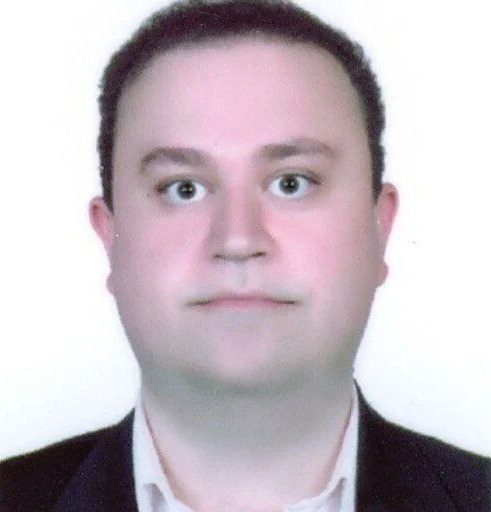
Roozbeh Vadi was a brilliant Iranian scientist known for his intelligence, kindness, and quiet dedication to the life he shared with his mother in the family home where they had lived for four decades. He did not come from wealth or hold significant assets; instead, he focused on his work, his studies, and supporting his family.
In early 2024, he became entangled in a dispute with his employer that escalated into a wrongful accusation of espionage. Despite having no connection to foreign intelligence services, he was arrested and held for 18 months. During his detention, he was subjected to severe mistreatment, and pressure was placed on him through the arrest of his mother. Under these circumstances, authorities extracted a forced confession — the only evidence presented against him.
Roozbeh faced two trials overseen by Judge Salavati, a figure widely criticized by human rights organizations. In the second trial, his execution was approved by Salavati’s son, who also served as a judge. Although he had already been imprisoned for well over a year, and there had been no indication that he would receive a death sentence, his case suddenly escalated after regional conflict intensified and the 12 day war. In August, he was executed overnight, despite the absence of credible evidence against him.
Roozbeh Vadi, around 40 years old, was a gifted Iranian nuclear expert who worked at the Atomic Energy Organization of Iran as a patriot developing peaceful nuclear technology, one of the country’s key and sensitive scientific institutions. He lived with his mother in their family home, which they had shared for over four decades, and had no significant personal assets or wealth. Despite his professional accomplishments, Roozbeh became the target of state accusations following an argument with his employer, which escalated into claims of espionage for Israel.
He was arrested approximately 18 months prior to his execution and detained under harsh conditions. During his imprisonment he suffered physical abuse, including broken ribs and legs, and was subjected to psychological pressure. Authorities used his mother’s detention and showed him images of her in custody to extract a forced confession, which was the only evidence cited in his case.
Roozbeh faced two trials in the Revolutionary Court, overseen by Judge Abolghasem Salavati. His death sentence was later confirmed by Salavati’s son, who also serves as a judge. Despite the long period of detention and the absence of credible evidence, Roozbeh was executed overnight on 6 August 2025, in the wake of the 12-day war between Iran and Israel, a conflict during which Iran suffered missile strikes and the assassination of multiple nuclear scientists. Reports indicate he was executed by hanging, likely at Ghezelhesar Prison, Tehran.
His execution was part of a broader surge in death sentences handed down to those accused of collaborating with Israel. These cases have been widely criticized by human rights organizations as politically motivated and based on confessions obtained under duress. Roozbeh is remembered as a brilliant and innocent patriot scientist whose life was cut short by an unjust judicial process. His story highlights the severe risks faced by innocent people in Iran’s politically charged legal system, where trials lack due process and confessions are often extracted under coercion. He is one of more than 1,500 people executed in Iran since January 2025.
According to his cousin, Vahid Razavi, his forced confession video was broadcast on Iranian state television and circulated online. The video contains major omissions and inconsistencies, including the following:
• Roozbeh had been imprisoned for nearly 18 months before the 12-day war. The confession video never mentions this.
• He was the primary target in the Israeli airstrike on Evin Prison on June 23rd, which killed 79 people, including prisoners, guards, and staff, in the same ward where he was held.
• Several of his fellow nuclear scientists and colleagues had been killed by Israeli strikes in the weeks leading up to his death.
The confession video itself is entirely false and defies basic common sense. It claims he received a black bag full of cash as payment. In an age of digital transactions, why would a highly educated scientist accept cash in a bag? It also claims he transferred documents by copying sensitive files onto a hard drive or USB stick and handing them over on top of a toilet in a public park. This makes no sense when secure digital transfer platforms such as Signal or Telegram exist. The video also suggests he cooperated in exchange for the promise of a future trip, even though he had already traveled abroad to conferences in Vienna and elsewhere and never defected. Why would he stay in Iran if he had truly committed an act of espionage that carries the death penalty.
As a respected scientist, Roozbeh Vadi had the skills and reputation to live and work in any country. He stayed in Iran because he wanted to serve his homeland.
Execution by hanging
Roozbeh Vadi’s death was the result of an execution ordered by Iran’s Revolutionary Court after he was convicted of “espionage” for Israel — a charge his family and many observers believe was fabricated and based on a forced confession extracted under severe pressure.
He had been detained for about 18 months before his execution.
During this time, he was subjected to:
physical abuse, including serious injuries, intimidation, threats involving his mother, and psychological pressure designed to force him to confess.
Despite the absence of credible evidence and the irregularities in his case, he was given a death sentence. After the 12-day war between Iran and Israel, Iranian authorities moved quickly and carried out the execution without the normal notice or procedural timeline, suggesting the decision was politically motivated.
My cousin, Roozbeh, was killed at the hands of the Salavati family in a sham judicial process. Two separate trials—both overseen by a father and son—determined his fate. This level of nepotism in a supposed legal system is unheard of. How is it possible that a father and son are allowed to preside over the same prisoner in two different trials, each reinforcing the other’s corruption? As if the junior Judge Salavati would ever dare contradict or overrule his own father’s verdict. Roozbeh was never politically active. He was a scientist—devoted, patriotic, and committed to empowering the Iranian people through peaceful nuclear energy and scientific advancement. During the 18 months he was imprisoned, none of us—his family, his relatives—knew where he was, nor did we know that his mother had also been jailed. We learned of his death the same way the rest of the world did: through news outlets reporting that he had been murdered under the authority of Salavati, father and son. The inhumanity and crimes committed by the Salavati family against innocent civilians in Iran are well-documented by human rights organizations. This level of injustice is appalling, unforgivable, and a stain on any society that claims to value law, humanity, or dignity. I, Vahid Razavi, demand an immediate end to this corruption and nepotism. I demand justice for Roozbeh and for the countless others who have been sentenced, tortured, or killed under the rulings of these two judges. I call for a full, transparent investigation into his case and all similar cases. I further demand an end to capital punishment in Iran—no more hangings, no more executions, no more torture, no more forced confessions. May justice, human rights, and human dignity prevail in my country of birth one day.
This record exists so that Roozbeh Vadi, and all who are named in this archive, are never reduced to a number.
More lives from the archive.