At Rest
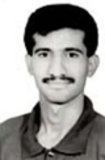
**Ezzat Ebrahim-Nejad** was an Iranian student, poet, and symbol of resistance. Born in Ahvaz, he graduated in law from Shahid Chamran University in 1998. In **July 1999**, he was **shot and killed** by plainclothes security forces during a brutal raid on Tehran University dormitories, sparking the **1999 student uprising**. His death gained global attention when a photo of his **blood-stained shirt** appeared on the cover of *The Economist*. Despite his family’s efforts, no one was held accountable for his death, and his memory was later targeted, with his cause of death erased from his grave. Ebrahim-Nejad’s legacy endures as a symbol of courage and the fight for justice in Iran.
Ezzat Ebrahim-Nejad was an Iranian student, poet, and dreamer whose life and tragic death became a symbol of resistance and the struggle for freedom during one of the most turbulent periods in modern Iranian history. His story is one of hope, courage, and the harsh realities faced by those who dare to challenge oppression. Below is an extended biography based on available information:
Early Life and Education
Ezzat Ebrahim-Nejad was born in Ahvaz, a city in southwestern Iran, into a modest family. From a young age, he exhibited a passion for learning and a deep love for literature and poetry. His intellectual curiosity and talent earned him a place at Shahid Chamran University of Ahvaz, where he studied law. He graduated in 1998, described by those who knew him as a "talented, hardworking, and ambitious" individual with a bright future ahead.
Ebrahim-Nejad was not just a student of law but also a poet, using his words to express his dreams and frustrations. His poetry reflected his hopes for a more just and free society, as well as his awareness of the challenges faced by his generation under an oppressive regime.
The 1999 Student Uprising
In July 1999, Ezzat Ebrahim-Nejad’s life took a tragic turn during the Tehran University dormitory raid, a brutal crackdown by Iranian security forces on student protesters. The raid was a response to growing student demonstrations against the government’s suppression of free speech and political dissent.
During the raid, plainclothes agents (lebas-shakhsis)—unofficial paramilitary forces often used to intimidate and suppress dissent—stormed the dormitories. Witnesses reported that Ebrahim-Nejad was shot and killed by one of these agents. His death became a catalyst for the 1999 student uprising, one of the largest and most significant protests in Iran since the 1979 Revolution.
Global Symbol of Resistance
Ezzat Ebrahim-Nejad’s story gained international attention when Ahmad Batebi, a fellow student, was photographed holding up Ebrahim-Nejad’s blood-stained shirt. This powerful and haunting image was published on the cover of The Economist, symbolizing the brutality of the Iranian regime and the courage of those who resisted it. The photograph became an iconic representation of the struggle for freedom and justice in Iran.
According to Shirin Ebadi, the Nobel Peace Prize laureate and human rights lawyer, the shirt in the photograph belonged to Ebrahim-Nejad. Ebadi described him as a young man full of potential, whose life was tragically cut short.
The Quest for Justice
Ebrahim-Nejad’s family, devastated by his death, embarked on a relentless quest for justice. His father, determined to hold those responsible accountable, was even willing to sell their small provincial home to pay for legal fees. However, the family faced immense challenges, including harassment and intimidation by authorities.
Stones were thrown at them during visits to Ezzat’s grave.
They were excluded from government offices and denied access to legal recourse.
The case was delayed for years due to bureaucratic hurdles, with authorities claiming jurisdictional issues.
Ultimately, the revolutionary court dismissed the case, stating there were no official charges and that “Ezzat was dead anyway.”
The family’s struggle for justice highlighted the systemic impunity enjoyed by security forces and the lack of accountability for human rights violations in Iran.
Erasing His Memory
Even in death, Ebrahim-Nejad’s memory was not safe from the regime’s attempts to suppress dissent. By 2009, his grave was tampered with—his cause of death erased from the tombstone. This act was seen as an attempt to remove his story from public consciousness and erase the legacy of his resistance.
Legacy
Ezzat Ebrahim-Nejad’s life and death left an indelible mark on Iran’s history. He became a symbol of the courage and resilience of the Iranian people, particularly the youth, who continue to fight for freedom and justice. His poetry, his dreams, and his sacrifice live on in the hearts of those who remember him.
Poetry and Words: Ebrahim-Nejad’s poetry remains a testament to his hopes and dreams for a better future. His words continue to inspire those who seek change.
Student Movement: His death galvanized the 1999 student uprising, a pivotal moment in Iran’s modern history that inspired future generations of activists.
Global Impact: The image of his blood-stained shirt brought international attention to the Iranian regime’s human rights abuses, making him a global symbol of resistance.
Conclusion
Ezzat Ebrahim-Nejad’s story is one of tragedy, but also of enduring hope. Though his life was cut short, his legacy lives on in the ongoing struggle for justice and freedom in Iran. He remains a reminder of the high cost of dissent and the unyielding spirit of those who dare to dream of a better world. His memory continues to inspire activists, poets, and dreamers, both in Iran and around the world.
shot and killed in the attack by security forces on Tehran University
He was killed by gunfire during a security forces assault on the Tehran University dormitory, an event that ignited the July 1999 student uprising in Iran.
shot and killed in the attack by security forces on Tehran University
This record exists so that Ezzat Ebrahim-Nejad, and all who are named in this archive, are never reduced to a number.
More lives from the archive.