At Rest
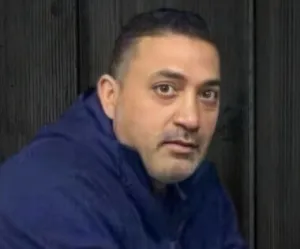
Rani Ma'moun Fayez Abu Ali, a 45-year-old Palestinian laborer and father of five from Beitunia near Ramallah, lived a life emblematic of the struggles faced by Palestinians under Israeli occupation. Born in 1977, Rani spent his adult years navigating the harsh economic realities of the West Bank, eventually obtaining one of the few permits available to Palestinians to work in Israeli settlements - at the Rami Levy supermarket in the Binyamin industrial zone. This grueling commute to an illegal settlement, undertaken daily to support his family, exemplified the painful compromises many Palestinians make under occupation.
Rani Ma'moun Fayez Abu Ali, a 45-year-old Palestinian laborer and father of five from Beitunia near Ramallah, lived a life emblematic of the struggles faced by Palestinians under Israeli occupation. Born in 1977, Rani spent his adult years navigating the harsh economic realities of the West Bank, eventually obtaining one of the few permits available to Palestinians to work in Israeli settlements - at the Rami Levy supermarket in the Binyamin industrial zone. This grueling commute to an illegal settlement, undertaken daily to support his family, exemplified the painful compromises many Palestinians make under occupation.
On November 29, 2022, Rani's ordinary workday turned fatal when Israeli forces shot him dead near Kochav Ya'akov settlement following a disputed traffic incident. The Israeli military claimed he attempted a car-ramming attack, but multiple pieces of evidence contradicted this narrative. Video footage showed his vehicle stationary when soldiers fired through the rear windshield, while witnesses reported he may have lost control after accidentally striking a soldier. The killing followed a now-familiar pattern: immediate lethal force against Palestinians, denial of medical access, and post-facto justification of the shooting.
Rani's death left his wife to raise their five children - the youngest just 4 years old - without their primary breadwinner. In the aftermath, his family joined the ranks of countless Palestinian families denied justice, as Israeli authorities praised the shooters while offering contradictory accounts of the incident. Forensic evidence suggested execution-style killing, with downward-angled gunshots into the immobilized vehicle.
More than just another statistic in the occupation's death toll, Rani's story reflects the systemic violence facing Palestinian workers trapped between economic necessity and military oppression. His commute to an illegal settlement for meager wages, the racial profiling that marked him as a "threat," and the impunity granted to his killers together paint a damning portrait of life - and death - under occupation. While Israeli media briefly framed him as a "terrorist," Rani's community remembers him as yet another victim of occupation logic that views Palestinian life as disposable.
Shot multiple times by Israeli soldiers
Rani Ma'moun Fayez Abu Ali, 45, died from multiple gunshot wounds inflicted by Israeli soldiers at close range on November 29, 2022. Forensic evidence revealed downward-angled bullet trajectories through his stationary vehicle's rear windshield, indicating execution-style firing rather than defensive action. The fatal shots struck vital organs, causing massive hemorrhaging compounded by the military's deliberate obstruction of Palestinian medics for over 30 minutes - a critical delay that ensured his exsanguination. While Israeli forces claimed he attempted a vehicular attack, video evidence showed his car immobilized after hitting a barrier, with soldiers smashing windows before firing. This pattern of disproportional lethal force, common in West Bank killings, reflects Israel's systemic shoot-to-kill policy against Palestinians, where post-hoc "ramming attack" allegations frequently justify extrajudicial executions while denying victims medical care. The autopsy confirmed Rani bled to death from wounds incompatible with survival, with the denial of timely emergency treatment constituting a secondary - yet equally culpable - cause of death under international humanitarian law.
Rani's widow, Umm Youssef (whose name is withheld for privacy), gave a tearful interview to local media: "They executed my husband in cold blood, then called him a terrorist to justify it. He was just going to work, like every day, to put bread on our table. Now my children cry themselves to sleep asking when Baba will come home." His eldest son, 16-year-old Youssef, angrily confronted cameras: "Where is the justice? They showed the world the video proving the soldiers lied, but no one will punish them. My father was murdered, and the killers will eat dinner with their families tonight."
This record exists so that Rani Ma’moun Abu Ali, and all who are named in this archive, are never reduced to a number.
More lives from the archive.