At Rest
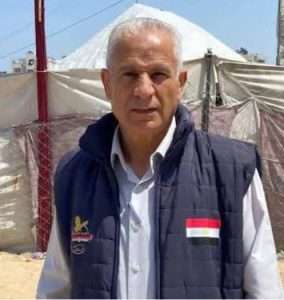
Mohammed Ali Hamoud al-Dawi was a Yemeni journalist who worked for both the 26 September and Yemen newspapers in Sanaa. A dedicated reporter known for his professionalism and commitment to truthful storytelling, Al-Dawi was among 31 journalists and media workers killed on September 10, 2025, when Israeli airstrikes struck the newspapers’ offices in the Yemeni capital. The attacks destroyed the Moral Guidance Directorate building that housed the media outlets. Colleagues and witnesses described the event as one of the deadliest single-day massacres of journalists since the 2009 Maguindanao massacre. His death marked a tragic loss for Yemen’s press community and underscored the continuing dangers faced by journalists covering conflict zones.
Mohammed Ali Hamoud al-Dawi was a Yemeni journalist working for the 26 September Newspaper and Yemen Newspaper, two major state-affiliated publications based in Sanaa. The 26 September Newspaper served as the official outlet of the Yemeni army, while Yemen Newspaper covered national and political affairs. Al-Dawi was respected among colleagues for his disciplined work ethic, his careful reporting, and his belief in journalism as a service to the people, even under conditions of war and censorship.
On September 10, 2025, Israeli airstrikes struck the Moral Guidance Directorate building in Sanaa, which housed the offices of 26 September and Yemen Newspaper. According to editor-in-chief Nasser al-Khadri, multiple strikes hit the newsroom at around 4:45 p.m., just as staff were finalizing publication of the weekly edition. Witnesses reported a series of explosions so intense that entire sections of the building were flattened. Journalist Abdulrahman Mohammed Mutahar, who lived nearby, described “massive explosio
Killed in Israeli airstrikes targeting the 26 September and Yemen Newspaper offices in Sanaa.
Mohammed Ali Hamoud al-Dawi was killed when Israeli airstrikes struck the Moral Guidance Directorate headquarters in central Sanaa on September 10, 2025. The building housed the offices of 26 September and Yemen Newspaper, both official Yemeni army-affiliated publications. Around 4:45 p.m., as journalists prepared the weekly issue, multiple precision-guided missiles hit the complex, reducing it to rubble. The attack was later justified by the Israel Defense Forces as a strike on the “Houthi Public Relations Department,” though no prior warning was given and the casualties consisted entirely of journalists and media personnel. The assault left 31 dead and many more injured, making it the deadliest attack on journalists in recent history.
This record exists so that Mohammed Ali Hamoud al-Dawi, and all who are named in this archive, are never reduced to a number.
More lives from the archive.