At Rest
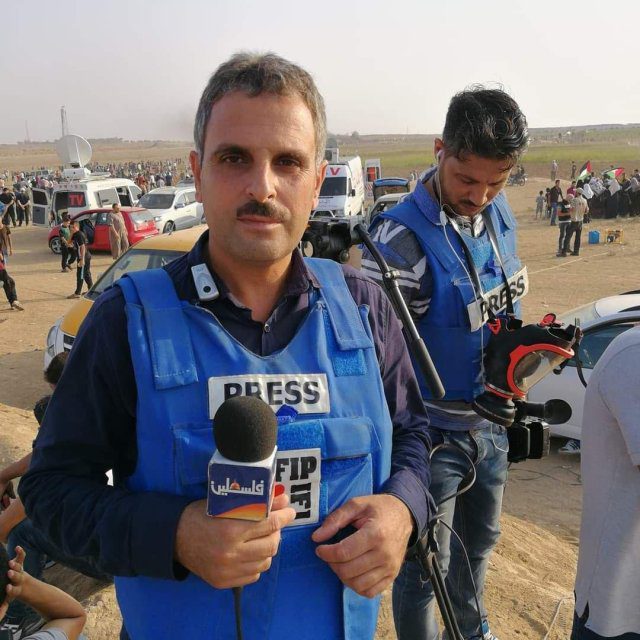
Mohammed Abu Hatab was a seasoned Palestinian journalist and correspondent for Palestine TV, known for his dedicated coverage of life and conflict in Gaza. Based in Khan Younis, he regularly reported on the humanitarian situation and the impact of war on civilians. On 2 November 2023, after broadcasting live from Nasser Hospital about the worsening conditions in southern Gaza, he returned home to his family. Moments later, an Israeli airstrike hit his residence, killing him along with 11 relatives. His death underscored the extreme risks faced by journalists in Gaza, even when they are off duty or in civilian spaces.
Mohammed Abu Hatab was a veteran journalist and field correspondent for Palestine TV, a state-run broadcaster that provides coverage across Gaza and the West Bank. Based in Khan Younis, he became one of the most recognizable faces of the channel during the ongoing conflict, often appearing in live reports from hospitals, destroyed neighborhoods, and displacement shelters. Colleagues described him as calm, professional, and deeply empathetic in his reporting—particularly toward civilians suffering under blockade and bombardment. On the day of his death, Abu Hatab reported live from Nasser Hospital, detailing shortages of medicine, fuel, and food, and urging the world to pay attention to Gaza’s humanitarian catastrophe. He returned home less than an hour later to his family in Khan Younis, unaware that it would be his final broadcast. The Israeli airstrike that hit his home killed 12 people in total, including him, his wife, and several of his children. His colleagues at Palestine TV held a televised tribute in his memory, standing beside his bloodstained press vest as a symbol of the dangers faced by Palestinian journalists. Abu Hatab’s death became emblematic of the human cost of war reporting in Gaza, where entire families of journalists have been wiped out in the bombardments.
He was Killed in an Israeli airstrike that struck his home shortly after he returned from work.
According to eyewitnesses and Palestine TV reports, Abu Hatab had concluded a live broadcast from Nasser Hospital around one hour before his death. When he returned home to his residence in Khan Younis, an Israeli airstrike directly hit his house, killing him and most of his family members instantly. Local rescuers and fellow journalists who rushed to the scene confirmed that his press gear and identification were found among the rubble. His death highlighted the increasing danger to journalists in Gaza, even when they are not on assignment, as homes and residential areas were heavily targeted during the bombardment.
Few relatives survived the strike. Colleagues and extended family members publicly expressed their grief, calling for international protection for journalists in Gaza and accountability for the killing. Palestine TV anchors and staff made emotional on-air statements demanding an end to attacks on media workers, saying: “Mohammed was not a fighter. He was a journalist, a father, and a voice for the people of Gaza. Even at home, he was not safe.” His death drew widespread condemnation from journalist unions and human rights organizations, who called for an independent investigation into the targeting of media workers and their families.
This record exists so that Mohammed Abu Hatab, and all who are named in this archive, are never reduced to a number.
More lives from the archive.