At Rest
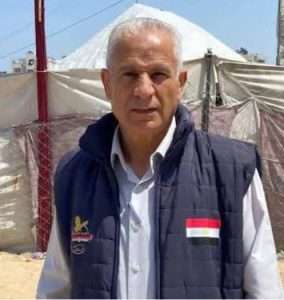
Mohammed Abdo Yahya al-Sanfi was a Yemeni media worker employed by the 26 September and Yemen newspapers, two publications operating from the Moral Guidance Directorate building in Sanaa. These newspapers serve as official outlets for the Yemeni army under Houthi authority. Al-Sanfi was part of the team responsible for producing weekly print coverage and daily updates during a tense period of ongoing conflict in Yemen. Although detailed personal information such as his early life, education, or family background is not publicly documented, he was known to be among the staff present in the newsroom on September 10, 2025, when the building came under heavy Israeli bombardment. His death placed him among the dozens of Yemeni media workers killed in what international press freedom organizations described as one of the deadliest attacks on journalists in modern history.
Public records on the life of Mohammed Abdo Yahya al-Sanfi are limited, as is often the case for media workers in conflict zones. What is known indicates that he was part of the tightly knit press community in Sanaa, working within the Moral Guidance Directorate headquarters, where several Houthi-aligned media outlets are based. The 26 September newspaper is one of Yemen’s longest-running military publications, and al-Sanfi’s work contributed to its weekly production schedule. His role may have included reporting, editing, layout preparation, or other newsroom responsibilities, but his exact job title was not specified by authorities or press-freedom groups. Colleagues described the environment inside the newsroom on the day of the attack as hectic, with staff preparing the week’s edition when multiple missiles struck the building. Al-Sanfi was among those who did not survive the blasts, which reduced the complex to rubble and left many journalists buried beneath collapsed rooms and printing equipment. His de
He was killed by Israeli airstrikes targeting the newspaper complex in Sanaa.
On September 10, 2025, Israeli forces launched a series of airstrikes on Sanaa, firing multiple missiles at the Moral Guidance Directorate headquarters, the building that housed the 26 September and Yemen newspapers. The explosions were described by witnesses as some of the largest the city had experienced in a decade, collapsing the multistory structure and trapping journalists and staff inside. Al-Sanfi was among those killed instantly or crushed under debris. The strike resulted in the deaths of 31 journalists and media workers, making it one of the deadliest single attacks on press personnel since the Maguindanao massacre in the Philippines. The building was largely reduced to rubble, and recovery teams spent hours attempting to extract bodies from beneath destroyed offices and printing rooms.
This record exists so that Mohammed Abdo Yahya al-Sanfi, and all who are named in this archive, are never reduced to a number.
More lives from the archive.