At Rest
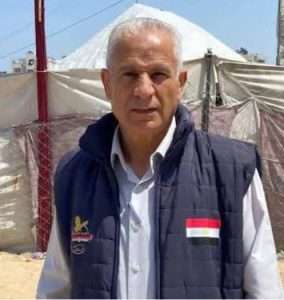
Haithm Hasan Hajaj was a 41-year-old Palestinian civil engineer from northern Gaza and a father of three. Prior to the war, he was close to completing his PhD and aspired to teach and contribute to rebuilding his community. During Israel’s war on Gaza, Hajaj developed a serious but treatable illness. Due to the destruction of hospitals, lack of diagnostics, medicine shortages, and the prioritization of war injuries over chronic conditions, he was unable to receive adequate care. After months of deterioration, he died on March 2, 2025, leaving behind a grieving wife and three children.
Haithm Hasan Hajaj was a civil engineer, academic researcher, and family man living in northern Gaza. Before the war, he had nearly completed his doctoral studies and envisioned a future teaching and building for Palestinian society. In July 2024, he began experiencing severe health symptoms including abdominal pain, anemia, extreme weight loss, and fatigue.
As Gaza’s healthcare system collapsed under bombardment, siege, and shortages, Hajaj was repeatedly turned away from overwhelmed hospitals that were only treating acute war injuries. Diagnostic laboratories lacked basic materials, and doctors were unable to conduct even routine blood tests. After seven months, he was finally diagnosed with coeliac disease — a condition manageable through dietary changes — but the absence of food alternatives in Gaza meant he continued consuming wheat, worsening his condition.
He lost over 30 kilograms, developed painful skin conditions, and deteriorated into extreme frailty. He died two months later, not from the disease itself, but from systemic medical neglect caused by war conditions. His family also lost their home in Tel Al-Hawa to an airstrike. His death left deep psychological scars on his children, particularly his eldest son, who attempted to assume adult responsibilities amid hunger, fear, and trauma.
Medical neglect resulting from the destruction of Gaza’s healthcare system
Haithm Hasan Hajaj’s death resulted from indirect but preventable causes tied to the war. While coeliac disease is generally manageable, Gaza’s blockade and hospital collapse made diagnosis and treatment impossible. Hospitals lacked lab materials, medical staff were overwhelmed, and food scarcity meant dietary treatment could not be followed. His prolonged suffering led to organ failure and death. This represents what the article describes as a “slow, quiet death” — deaths not counted in airstrike statistics but caused by systemic deprivation.
His wife Mona expressed grief that he died not from violence but from lack of care and dignity Their children repeatedly ask when their father will return His youngest child offered to “share bread” to make him better, unaware that wheat worsened his illness His eldest son expressed despair, stating he wished he had died with his father after failing to find food These pleas underscore the humanitarian toll on families experiencing loss through medical abandonment rather than immediate violence.
This record exists so that Haithm Hasan Hajaj, and all who are named in this archive, are never reduced to a number.
More lives from the archive.