At Rest
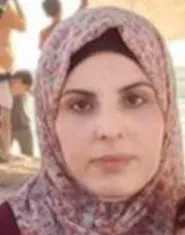
Naglaa Shawqi Zaki Al-Ghoul was a 29-year-old Palestinian woman from Gaza City. She was married and lived in the Al-Shati (Beach) Refugee Camp, one of the most densely populated areas in Gaza. Like many in the besieged territory, her life was shaped by hardship, resilience, and the daily struggle for survival under decades of occupation and blockade. On October 28, 2023, Naglaa was martyred when Israeli occupation aircraft targeted the home of the Al-Ghoul family in Al-Shati Camp. The house was sheltering multiple displaced families at the time of the attack. The airstrike was launched without prior warning, leading to the death of Naglaa and several others. Her tragic death reflects the devastating toll of indiscriminate bombardment on civilians in Gaza and the vulnerability of women and families seeking refuge. Naglaa's life, cut short in a place meant to offer sanctuary, symbolizes the enduring suffering endured by the Palestinian people amid ongoing violence.
Naglaa Shawqi Zaki Al-Ghoul was a 29-year-old Palestinian woman born and raised in Gaza City, a place that has witnessed repeated wars, blockades, and immense human suffering. She was a wife, a daughter, and a member of the tightly knit Al-Ghoul family, which resided in Al-Shati (Beach) Refugee Camp — one of the most crowded and impoverished areas in the Gaza Strip. The camp, originally established to house Palestinians displaced during the 1948 Nakba, has become a symbol of both survival and struggle, and it was within this space that Naglaa built her life.
Naglaa lived under the constant threat of violence, as Gaza has endured numerous military offensives over the past two decades. Despite the hardship, she remained grounded in her community and committed to her family. Like many women in Gaza, she was a pillar of emotional and practical support to those around her, especially in times of displacement, loss, and fear. Her days were marked by resilience — cooking under siege, caring for loved ones in overcr
Killed by Israel airstrike
Naglaa Shawqi Zaki Al-Ghoul was killed as a result of an Israeli airstrike that targeted her family home in the Al-Shati (Beach) Refugee Camp on October 28, 2023. The attack occurred without any prior warning or evacuation notice, a tactic that has tragically become common during the repeated military assaults on Gaza. The house that was bombed was not only the residence of the Al-Ghoul family but had also become a refuge for multiple displaced individuals and families who had fled bombardments in other areas of Gaza, believing they might find safety among relatives or in more populated residential zones.
The strike was carried out by Israeli warplanes, which fired precision-guided munitions on the building. The attack instantly reduced the structure to rubble, killing Naglaa and several others in the explosion and the building’s collapse. The lack of warning meant that no one inside had a chance to escape or seek shelter, turning a home into a deathtrap within seconds. Rescue workers and neighbors later pulled the bodies of the victims, including women and children, from the debris. Naglaa’s death was one of many that day, but each name, each body, each life lost, tells its own harrowing story of war’s indiscriminate brutality.
In the aftermath of the deadly airstrike that took the life of Naglaa Shawqi Zaki Al-Ghoul, surviving members of the Al-Ghoul family—those who remained amid the rubble and chaos—voiced heart-wrenching pleas to the international community. Their cries echoed the sorrow and desperation shared by thousands of Palestinian families who have suffered unimaginable loss. One relative, overwhelmed with grief while standing beside the ruins of their destroyed home, begged the world to “see us as human beings.” Holding a photograph of Naglaa and pointing toward the lifeless debris that once sheltered their family, they asked, “What threat did she pose? What did she do to deserve this death?” Survivors, some wounded themselves, pleaded for an end to the indiscriminate bombardment, demanding protection for civilians and justice for those killed. "We were told to leave our homes to stay with family. We did, and now they're gone too," a cousin said, tears mixing with dust and blood on his face. "We ask the world—where can we go to live without fear of being buried in our sleep?"
This record exists so that Fatima Zaki Mustafa Al-Ghoul, and all who are named in this archive, are never reduced to a number.
More lives from the archive.