At Rest

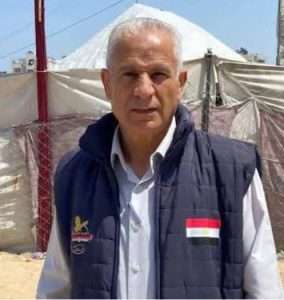
Ahmed Abu Aziz was a 29-year-old freelance journalist from Gaza who contributed to outlets including Middle East Eye and Quds Feed. Known for his tireless commitment to his profession, he was described by colleagues as “the journalist who never stopped,” frequently traveling across the Gaza Strip to cover the realities of war despite the immense dangers. His reporting often centered on hospitals, including Nasser Hospital in Khan Younis, where he bore witness to the humanitarian toll of Israel’s offensive. Married just a year before his death, he was deeply supportive of his wife’s academic ambitions, and together they dreamed of completing their PhDs side by side.
Ahmed Abu Aziz built a reputation as one of Gaza’s most resilient young journalists. At only 29, he had already established himself as a respected voice through his work with Middle East Eye and other platforms. His colleagues admired his bravery, noting that even under heavy bombardment he never ceased reporting, moving across the besieged strip to tell stories of suffering, survival, and resilience. Ahmed spent much of the war based at Nasser Hospital, which had become both a reporting hub and a refuge for many journalists and displaced families. Personally, Ahmed was newly married to Lurzan Abu Aziz, a 28-year-old PhD law student. He too was pursuing a PhD in media, and the couple dreamed of defending their theses together in 2025. Lurzan recalled his constant encouragement, his insistence that she continue her studies despite the hardship, and his vision of their future together. Tragically, those dreams ended when Ahmed was killed in the August 25, 2025 strike. His wife later found his body beneath the r
Ahmed Abu Aziz was killed in an Israeli double airstrike on Nasser Hospital in Khan Younis, Gaza, on August 25, 2025, while reporting from the hospital grounds.
On August 25, 2025, Israeli forces carried out a two-stage “double-tap” strike on Nasser Hospital in southern Gaza. The first strike hit a building at the hospital, drawing journalists and medics rushing to the scene to help victims and document the aftermath. Fifteen minutes later, a second, more powerful strike hit the exact same location, killing five journalists, including Ahmed Abu Aziz. Witnesses reported that unarmed medics and reporters were clearly identifiable, with some holding up their hands moments before being killed. Israel later claimed it was targeting a Hamas surveillance camera on the hospital’s roof. International media organizations and rights groups condemned the attack, stressing that it constituted a grave violation of international law and a possible war crime, as hospitals and journalists are both protected under the Geneva Conventions.
His wife, Lurzan Abu Aziz (28), who married him in July 2024, spoke with deep grief after his killing. She found his body after the Nasser Hospital strike and described how much he had supported her education and dreams. Lurzan shared that Ahmed always encouraged her to continue her PhD in law, while he himself was pursuing a PhD in media. They had dreamed of defending their dissertations side by side in 2025. She said: “His dream was for us to earn our doctorates together. He always urged me to defend my dissertation no matter what, and he encouraged me endlessly. We were supposed to defend our theses together this year, but he left and I am alone, grieving his loss.” Colleagues at Middle East Eye also honored him as “the journalist who never stopped,” echoing the family’s grief with pleas for accountability and for greater protection of journalists in Gaza.
This record exists so that Ahmed Abu Aziz, and all who are named in this archive, are never reduced to a number.
More lives from the archive.