At Rest
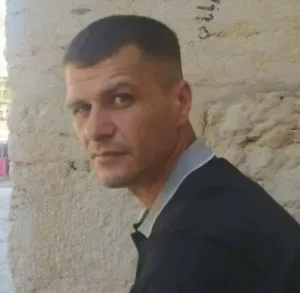
Rabi Arafa Rabi, a 32-year-old Palestinian construction worker from Qalqilia in the northern occupied West Bank, was fatally shot by Israeli soldiers on October 22, 2022, near a military checkpoint along Israel’s illegal Annexation Wall. The killing occurred at Roadblock 109, close to Nabi Elias village, where Israeli forces opened fire on a group of Palestinian laborers attempting to cross into work areas. Rabi, struck by a live bullet to the head, was rushed first to Darwish Nazzal Hospital in Qalqilia and later transferred to Rafidia Hospital in Nablus, where he succumbed to his wounds.
Rabi Arafa Rabi, a 32-year-old Palestinian construction worker from Qalqilia in the northern occupied West Bank, was fatally shot by Israeli soldiers on October 22, 2022, near a military checkpoint along Israel’s illegal Annexation Wall. The killing occurred at Roadblock 109, close to Nabi Elias village, where Israeli forces opened fire on a group of Palestinian laborers attempting to cross into work areas. Rabi, struck by a live bullet to the head, was rushed first to Darwish Nazzal Hospital in Qalqilia and later transferred to Rafidia Hospital in Nablus, where he succumbed to his wounds.
Life and Struggles Under Occupation
Rabi, like many Palestinians from Qalqilia, had spent years navigating the brutal restrictions imposed by Israel’s separation barrier—a massive concrete wall deemed illegal by the International Court of Justice in 2004. Before its construction, workers from Qalqilia could freely travel to jobs inside Israel, but after 2003, the Wall severed economic lifelines, forcing laborers to risk their lives crossing military checkpoints or climbing over barriers to reach workplaces. Rabi, engaged to be married just days after his death, was one of countless Palestinians pushed into this perilous daily struggle for survival.
The Day of the Killing
On the morning of his death, Rabi joined other workers attempting to bypass the Wall when Israeli soldiers stationed at the checkpoint began indiscriminately firing live ammunition, rubber-coated bullets, and tear gas at the group. Witnesses described the shooting as unprovoked, with no apparent threat posed by the unarmed laborers. His father, devastated, stated that his son was "executed in cold blood"—a sentiment echoed by Palestinian media, which reported that Israeli settlers had also attacked Palestinian vehicles in the area before soldiers escalated the violence.
Aftermath and Systemic Injustice
Rabi’s death highlighted Israel’s routine use of lethal force against Palestinian workers near the Wall, where shootings, arrests, and harassment are commonplace. No Israeli soldiers were held accountable for his killing, reflecting the systemic impunity enjoyed by security forces in such cases. His funeral in Qalqilia drew mourners who condemned both the occupation and the economic suffocation that forces Palestinians into deadly confrontations just to earn a living.
Legacy: A Symbol of Palestinian Resilience
Though Rabi was not a militant, his death became a rallying cry against Israel’s collective punishment policies and the Annexation Wall’s role in strangling Palestinian livelihoods. His story embodies the everyday violence faced by workers under occupation—men who risk death not in battle, but simply trying to feed their families. His name now joins the long list of Palestinians killed at military barriers, their deaths barely noted internationally but forever etched into their communities’ memory.
He was shot and killed by Israeli soldiers
Rabi Arafa Rabi's death resulted from a targeted high-velocity gunshot wound to the head, inflicted by Israeli forces at close range. The 5.56mm rifle round entered through his right temple, causing catastrophic brain damage as it fragmented through his skull. The bullet's trajectory destroyed critical brain structures, including the parietal lobe and brainstem, while the temporary cavitation effect created massive internal hemorrhaging. Medical personnel at Darwish Nazzal Hospital documented fixed, dilated pupils and brain herniation upon arrival - clear indicators of irreversible neurological damage. Despite emergency interventions, including intubation and IV fluids, Rabi succumbed to his injuries within hours. The wound's characteristics - including the precise headshot placement and absence of close-range powder burns - suggest deliberate lethal intent rather than accidental discharge or warning fire. This killing follows a well-documented pattern of Israeli forces employing disproportionate, often fatal violence against Palestinian laborers attempting to cross military checkpoints, with headshots representing a disturbingly common cause of death in such incidents. Forensic evidence contradicts official claims of "warning shots," instead indicating a systematic use of sniper-style precision against unarmed civilians. The nature of Rabi's fatal injuries underscores the calculated brutality of occupation forces, who routinely employ military-grade weapons against vulnerable populations engaged in nothing more dangerous than seeking livelihood.
This record exists so that Rabi Arafa Rabi, and all who are named in this archive, are never reduced to a number.
More lives from the archive.