At Rest
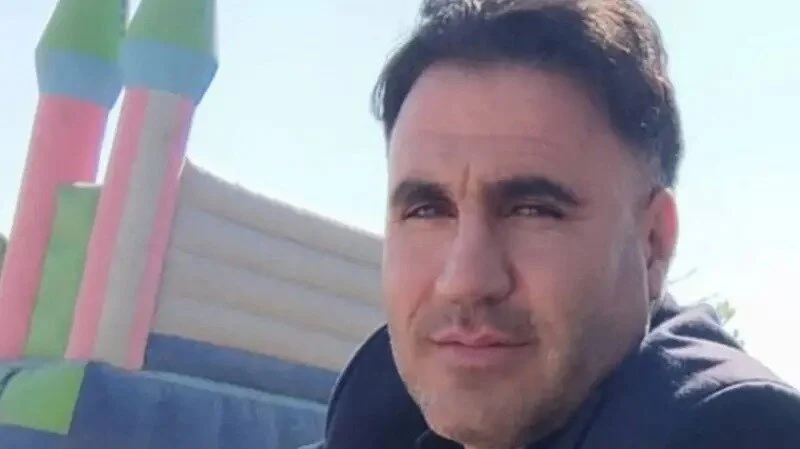
Hamid Hosseinnezhad Heydaranlou (1985–2025) was a Kurdish political prisoner from Segrik village in Chaldoran, West Azerbaijan Province, Iran. A father of three, he worked as a border porter to support his family. Arrested in April 2023, he was accused of involvement in a 2017 attack that resulted in the deaths of eight Iranian border guards. Despite evidence indicating he was in Turkey at the time of the incident—including passport stamps and eyewitness testimony—he was charged with "baghy" (armed rebellion) due to alleged ties to the Kurdistan Workers' Party (PKK). During nearly a year in solitary confinement, he endured severe physical and psychological torture aimed at extracting forced confessions. In July 2024, he was sentenced to death by Judge Reza Najafzadeh of the Revolutionary Court in Urmia, a verdict later upheld by the Supreme Court under Judge Qasem Mazinani. His execution was carried out in secret on April 20, 2025, without prior notice to his family or legal counsel. His 10-year-old daughter, Ronahi, publicly pleaded for his life and revealed attempts by security forces to coerce her into making false statements against her father. The family's sit-in protest outside Urmia Central Prison temporarily delayed the execution, but it ultimately proceeded without transparency or due process.
Hamid Hosseinnezhad Heydaranlou (1985–2025) was a Kurdish political prisoner from Segrik village in Chaldoran County, West Azerbaijan Province, Iran. A father of three, he worked as a border porter to support his family. On April 13, 2023, he was arrested near the Chaldoran border by Iranian border guards. Initially detained on smuggling charges, he was later accused of "baghy" (armed rebellion) through alleged membership in the Kurdistan Workers' Party (PKK) and involvement in a 2017 attack that resulted in the deaths of eight Iranian border guards. Despite evidence indicating he was in Turkey at the time of the alleged incident—including passport stamps and eyewitness testimony—he was subjected to nearly a year of solitary confinement and severe torture aimed at extracting forced confessions. In July 2024, he was sentenced to death by Judge Reza Najafzadeh of the Revolutionary Court in Urmia, a verdict upheld by the Supreme Court under Judge Qasem Mazinani in March 2025. His 10-year-old daughter, Ronahi, publicly pleaded for his life, revealing attempts by security forces to coerce her into making false statements against her father. Despite a sit-in protest by his family outside Urmia Central Prison, Hamid was secretly executed on April 20, 2025, without prior notice to his family or legal counsel. His case has drawn widespread condemnation from human rights organizations, highlighting severe due process violations and the use of torture to obtain confessions.
executed by hanging
Hamid Hosseinnezhad Heydaranlou, a 39-year-old Kurdish political prisoner from Iran, was executed by hanging on April 20, 2025, at Urmia Central Prison. His execution was carried out in secret, without prior notice to his family or legal counsel.
Yes, there were deeply moving and public pleas from Hamid Hosseinnezhad Heydaranlou’s surviving family, especially from his 10-year-old daughter, Ronahi: Ronahi’s Pleas: Publicly pleaded for her father's life, speaking out despite threats and intimidation. Revealed that Iranian security forces tried to force her to give false testimony against her father, threatening to kill him if she did not comply. Courageously refused, standing firm even under extreme psychological pressure. Her defiance and appeal became a symbol of resistance, drawing public attention to the injustice surrounding her father’s case. Family Sit-in Protest: Ronahi and other family members staged a sit-in outside Urmia Central Prison in the days leading up to the execution. The protest temporarily delayed the execution, showing that public pressure had some impact. The family continuously appealed to Iranian authorities and international organizations to intervene and stop the execution. Despite their efforts, Hamid was executed in secret on April 20, 2025, without final notice. The family's emotional and courageous stand, especially by a child like Ronahi, underscores the human cost of injustice and repression.
This record exists so that Hamid Hosseinnezhad Heydaranlou, and all who are named in this archive, are never reduced to a number.
More lives from the archive.