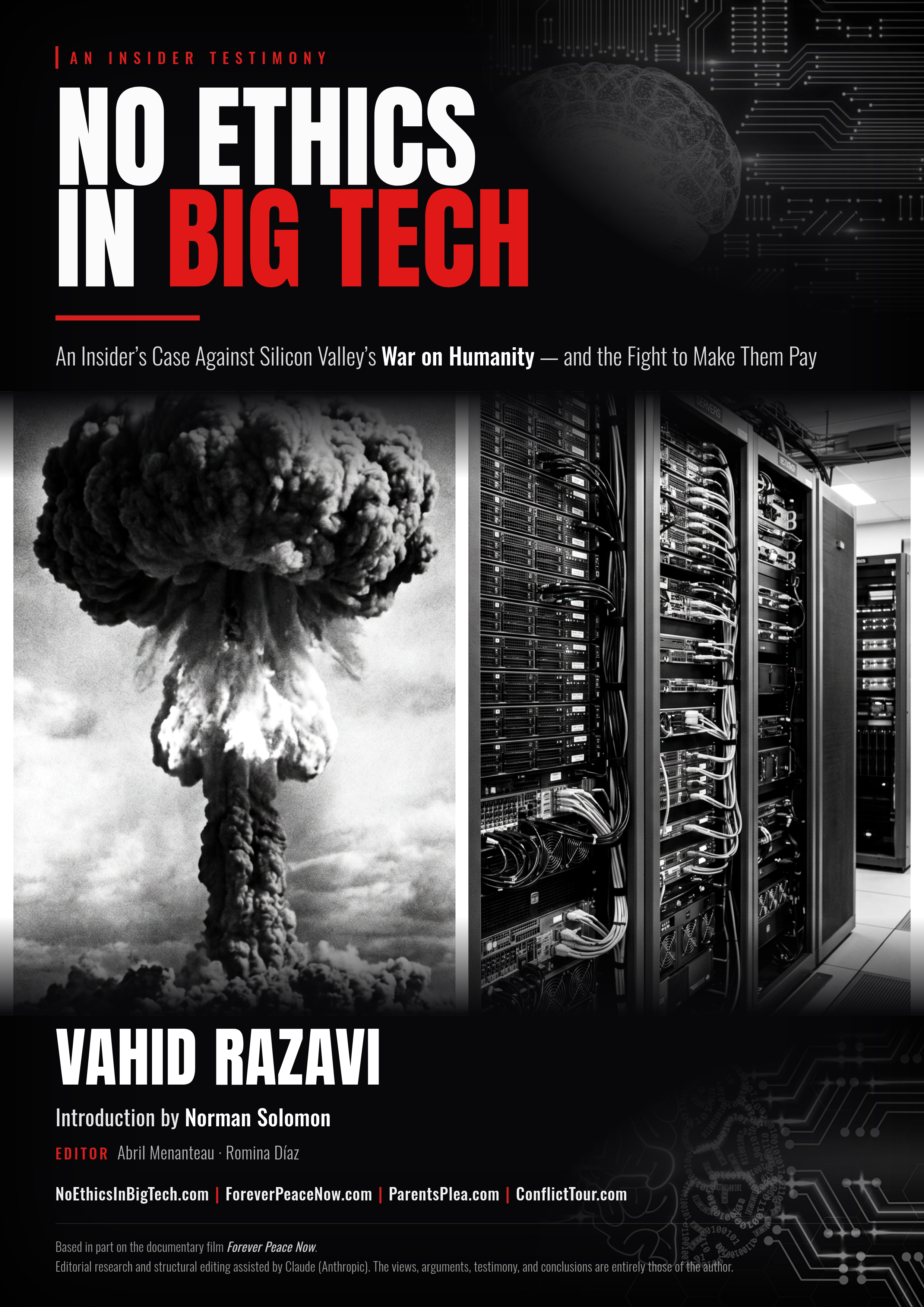
The book drops in three days — on Hiroshima Day. That date was not an accident. Keep reading.
When I was ten years old, I traveled with my late mother to Switzerland — Zurich and Bern — in a failed attempt to get visas to visit my loving family in the United States. After a month in that beautiful country, we were denied. While we were there, I wanted an Atari console. Our family budget said no. I settled for the Super Mario Bros. handheld Cement Factory game — Mario running back and forth, emptying cement trucks before the clock ran out. And I added to the one collection I already treasured back home: Legos. You can never have enough Legos.
But I never used my Legos to build houses. I used them as soldiers — before G.I. Joe ever existed — waging battles and mounting defenses inside my mother’s chador while she prayed. Call me a creative kid. When you are exposed to war and inhumanity at a young age, your games follow your thoughts, and your thoughts follow the war. Mine were focused on Lego battles fought inside a chador.
I bring up Legos not because of the recent Iranian Lego campaign against US imperialism in the West. I bring them up because they are the perfect metaphor for what comes next. Lego manufacturers know exactly how well the pieces fit — you can build a Star Wars set or a simple house from the same bricks. And it turns out my life’s work has been snapping together an argument against Big Tech’s war on humanity, piece by piece, until it fits as tight as Lego bricks. Let me show you the components.
First: thirty years inside the machine. From a sales rep at a retail computer store, to data center sales, to enterprise sales of colocation and telecommunications. Co-founder of startups providing consumer guarantees and protection through WarrantyNow. Selling hosting services for companies like Qwest Communications. Developing IVR technology for talking teddy bears at WABI, funded by Brian Maxwell. CRM companies. Search companies like Fast Search & Transfer. My own business cloud computing company, BizCloud. Then Amazon Web Services itself — inside the belly of the beast, in meetings with Andy Jassy before he became CEO of Amazon. Then Ethics in Technology, the nonprofit. And when the evidence made the name a lie, No Ethics in Big Tech. I have been there. I have done it. I am not writing about this industry from the outside — I am testifying from within it.
Second: two years of documentation. For the past two years, I and a small team have documented war crimes and crimes against humanity — before and after October 7th in Israel and Gaza. In the US, with George Floyd. In Iran’s war against its own people during the Woman, Life, Freedom movement. The lives lost to US strikes in the Caribbean. The current illegal US war on Iran. All of it documented through the pleas of surviving family members, biographical records, images, and news articles at ParentsPlea.com. These are not statistics. They are names, faces, and grieving parents demanding to be heard.
Third: the testimony on film. My documentary, available at ForeverPeaceNow.com, captures the actual statements of Silicon Valley technology executives, human rights and digital rights advocates, and my own personal story. But sound bites alone don’t prosecute anyone. Words are the beginning of a case, not the end of one.
Fourth: the demand for consequences. I have a petition, co-sponsored by RootsAction.org and WorldBeyondWar.org, to hold the companies and executives of Oracle, Microsoft, Amazon, Palantir, and Google accountable for crimes against humanity — and to bring the genocide case forward with the Government of Spain, or any nation on this earth that still has a conscience. Not a dialogue. Not a corporate social responsibility audit. Prosecution.
And now, the final piece: the book. No Ethics in Big Tech: An Insider’s Case Against Silicon Valley’s War on Humanity — and the Fight to Make Them Pay is the direct result of all of it, snapped together into one argument. Eighteen chapters, with an introduction by Norman Solomon. From “A Letter to Those Who Build the Machine” — addressed straight to the engineers and product managers building these tools right now — through the revolving door between the Pentagon and the boardroom, the invisible workforce, the algorithms aimed at our children, the empire’s trail of blood, and the legal case for Spain. It is written in English and translated into Spanish. It provides direct links, background facts, and documented sourcing — built with the help of AI, Claude, and Anthropic — to prosecute the criminals of Silicon Valley and break up these companies that have become too big to fail and too guilty to walk free.
The title of this post is not a joke. These executives have written their own indictment — in contracts, in earnings calls, in product roadmaps for the defense sector. All we are doing is handing them the rope of their own record and making sure the world watches what they do with it.
Read the book for free. Get educated. Demand justice. Sign the petition. Now.
Don’t let the bastards win!
— Vahid Razavi
NoEthicsInBigTech.com | ForeverPeaceNow.com | ParentsPlea.com
Add your name to the plea for accountability.
Stand with the families demanding truth, protection, and an end to the violence that takes their loved ones.
Sign the Petition →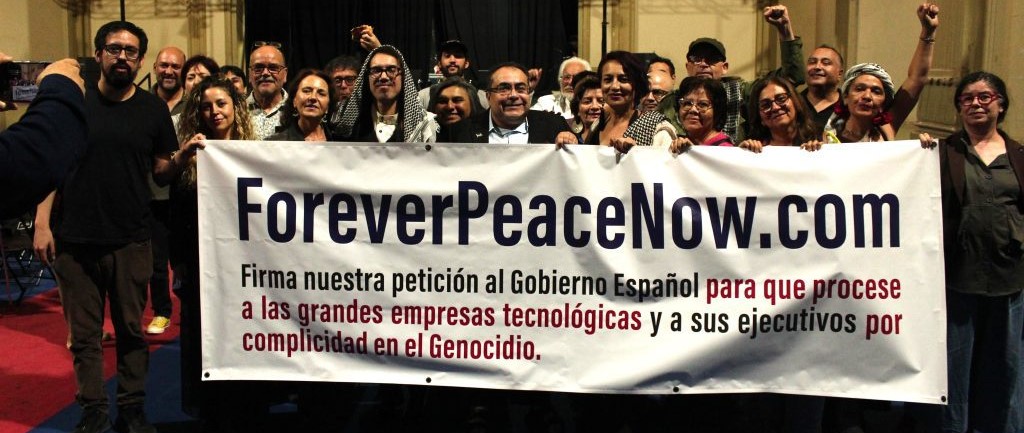 Supporters rally behind the petition for accountability.